
Smart safety helmets integrate advanced sensors, communication modules, and AI algorithms to upgrade traditional helmets from passive protection into proactive safety systems.
These next-generation helmets are designed to prevent accidents, enhance situational awareness, and improve emergency response efficiency across multiple industries.
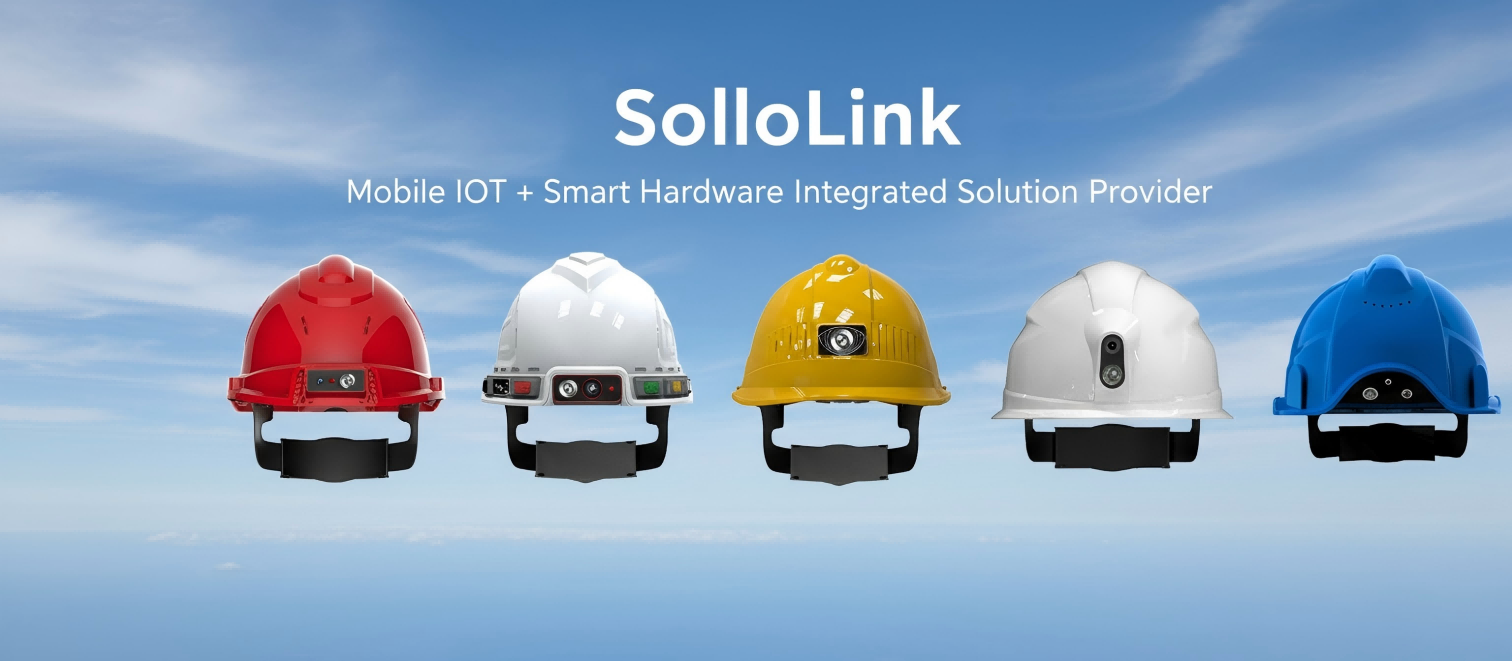
Smart helmets significantly reduce workplace risks and improve rescue response through the following key technologies:
1. Fall and Impact Detection
Built-in accelerometers and gyroscopes continuously monitor abnormal motion, sudden impacts, or falls.
When an incident is detected, the helmet automatically sends an emergency alert via a connected mobile device, including precise GPS location data to designated contacts.
2. Real-Time Environmental Monitoring
In industrial environments, integrated sensors detect hazardous conditions such as:
Toxic gases (e.g., carbon monoxide, hydrogen sulfide)
Before danger escalates, the helmet issues visual, audio, or vibration alerts, enabling workers to react immediately.
3. Health Monitoring with Silent Alerts (ST-00131 Wristband)
Smart helmets can track vital signs, including:
Heart rate, Body temperature, Blood oxygen levels.
This data helps identify risks such as fatigue, heat stress, or overexertion, preventing accidents caused by physical conditions.
Silent alerts ensure early intervention without disrupting workflow.
4. Blind Spot Detection and Collision Warning.
Certain smart helmets for riders are equipped with millimeter-wave radar technology, enabling:Blind Spot Detection (BSD).Rear Collision Warning (RCW)
When a vehicle approaches rapidly from behind, the system alerts the user, significantly enhancing road safety.
5. Integrated Lighting and Turn Signals
Built-in LED lighting systems improve visibility in low-light conditions. Features may include:Front and rear lights,Brake lights
Turn signals (activated via remote control or gesture sensing)
These functions greatly enhance safety for cyclists and motorcyclists.
6. Electrical Proximity Warning
Equipped with a built-in voltage sensing chip, the helmet provides proximity alerts for high-voltage power lines, including:
220V/10kV/35kV/10kV/220kV.
This feature is critical for workers in electrical, utility, and construction environments.
7. SOS Emergency Alert System
The integrated SOS system allows workers to quickly send emergency alerts in dangerous situations.
With a single action, users can notify supervisors or rescue teams, ensuring rapid response during critical incidents.

Industry Applications of Smart Safety Helmets
Smart helmets are widely used across multiple industries, delivering tailored safety features for each application:
🏗 Construction & Industrial
Fall detection alerts
Geofencing for hazardous zones
Real-time location tracking
Two-way communication
Health monitoring
🚨 Emergency Response
Infrared thermal imaging
AR-assisted vision
Real-time video transmission to command centers
⛏ Mining & Energy
Real-time toxic gas detection
Explosion-proof battery design
Continuous location tracking
Conclusion
Smart safety helmets represent the future of personal protective equipment (PPE) by combining AI, IoT, and real-time data intelligence.
By shifting from passive protection to active prevention, these solutions help organizations:
