
Modernizing U.S. Jobsite Safety Through Automation
The U.S. construction industry is rapidly adopting digital automation to elevate jobsite safety, streamline operations, and meet stringent Occupational Safety and Health Administration (OSHA) standards.
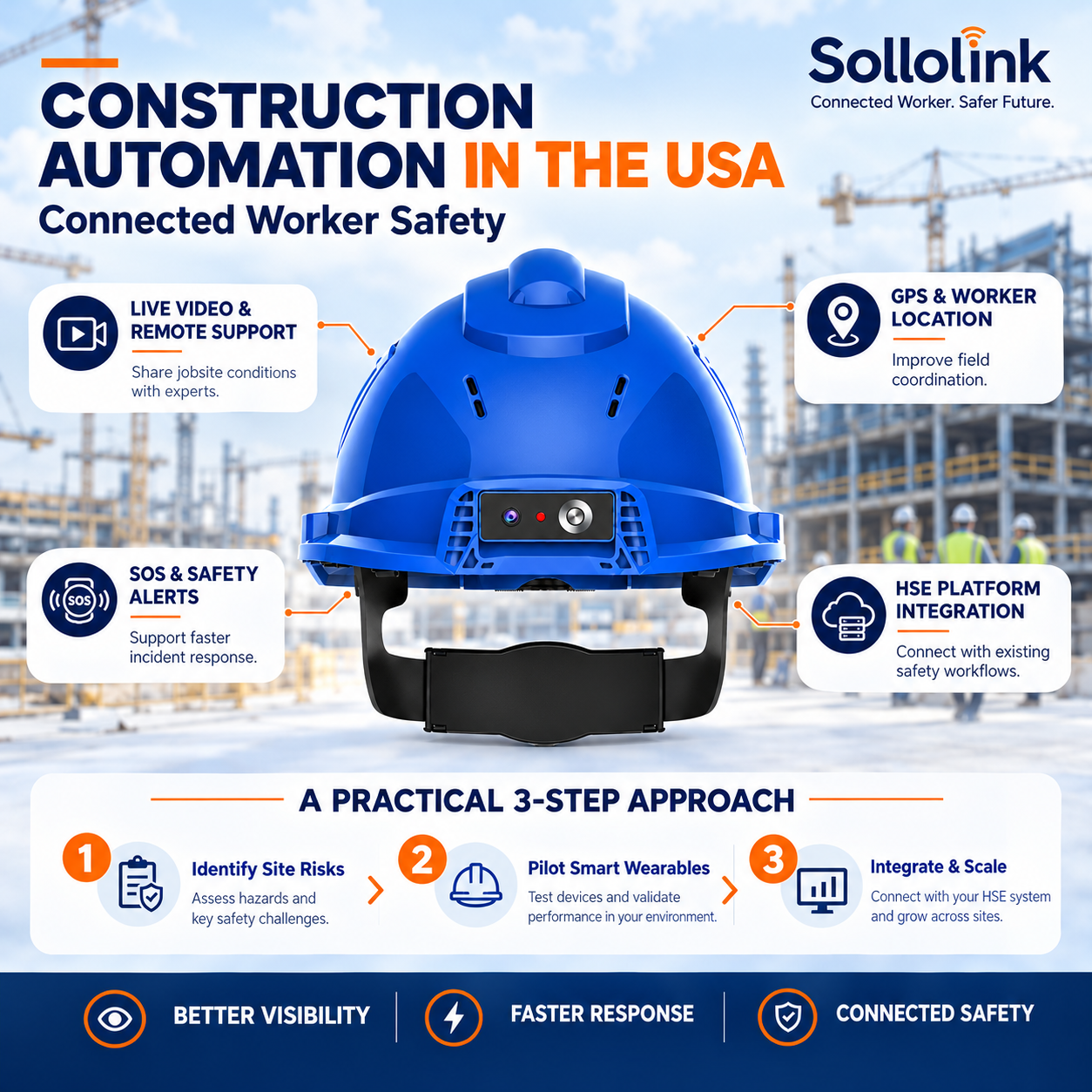
Traditional Environmental, Health, and Safety (EHS) workflows depend heavily on paper-based audits and post-incident reviews—leaving a critical real-time visibility gap out in the field. Construction safety automation bridges this gap by deploying artificial intelligence, Industrial IoT (IIoT), and connected wearables to create a real-time safety layer across frontline operations.
#ConstructionautomationUSA #Constructionsafetytechnology#Connectedworkersafety#Smartsafetyhelmet #Integratedsafetysolutions #Constructionsitesafetymanagement #OSHAcompliancetechnology
1. Core Applications of Safety Automation
Real-Time PPE Compliance: Computer vision and mobile edge nodes scan active work zones to verify hard hat, vest, and harness compliance automatically.
Automated Fall & Man-Down SOS: Edge-computed motion algorithms evaluate 6-axis IMU data to detect high-G falls, dispatching instant emergency notifications with exact spatial coordinates.
Active High-Voltage EMF Proximity Alarms: Onboard electromagnetic field sensors warn technicians via acoustic and haptic prompts before entering hazardous approach boundaries.
1080P POV Video & Remote Inspection: Field crews stream low-latency First-Person View (POV) video to off-site engineers, enabling instant visual audits while cutting travel overhead by up to 70%.
2. Seamless Integration with Existing EHS Systems
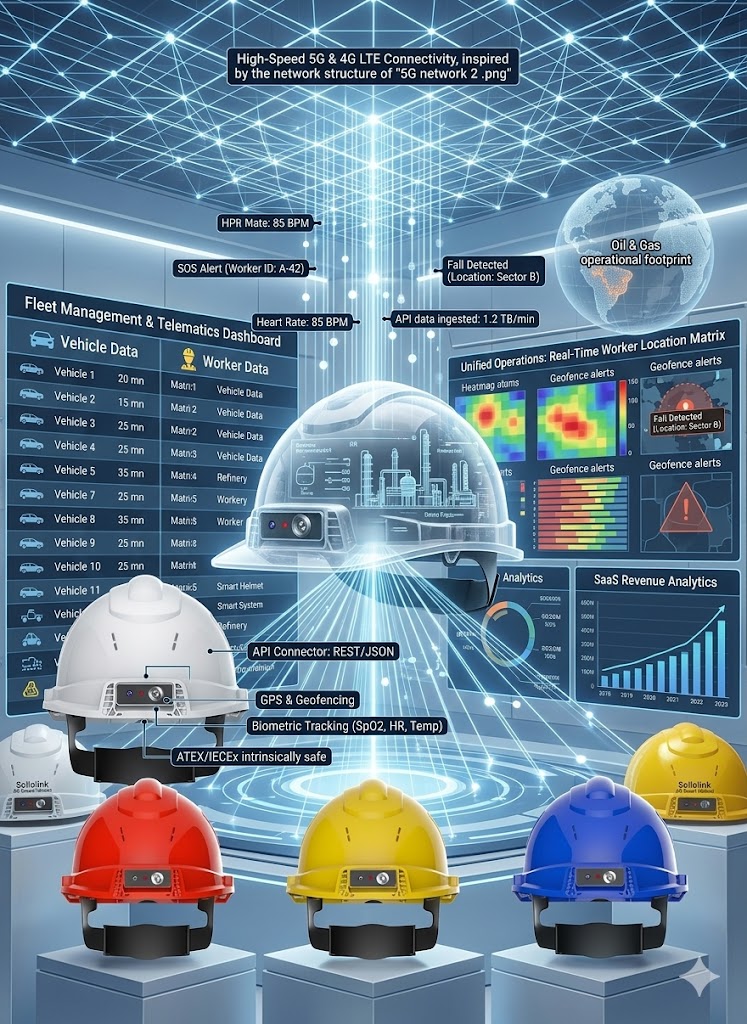
U.S. contractors do not need to replace their existing management software or fleet platforms. Solutions like the Sollolink ST-D6 Smart Safety Industrial Helmet feature native support for open protocols (Wialon, CMSV6, RTSP, and RESTful APIs).
Frontline ST-D6 Helmet ──► Cellular / Wi-Fi ──► Wialon / Open APIs ──► Central Enterprise Dashboard
Integrators and safety leads can pair device IMEIs directly into current dispatch software—unifying heavy machinery, fleet vehicles, and frontline workers under a single dashboard with zero custom software development.
#ConstructionautomationUSA #Constructionsafetytechnology#Connectedworkersafety#Smartsafetyhelmet #Integratedsafetysolutions #Constructionsitesafetymanagement #OSHAcompliancetechnology
3. Practical 5-Step Implementation Framework
Identify Priority Risks: Evaluate high-consequence jobsite hazards (e.g., fall risks, lone-worker isolation, electrical proximity).
Assess Site Infrastructure: Confirm 4G LTE/Wi-Fi site coverage and existing EHS software interfaces.
Deploy a Pilot Project: Test the ST-D6 Smart Helmet within a designated work zone to validate alert delivery and battery performance under real-world conditions.
Train & Integrate: Pair device IMEIs into your central EHS portal and establish clear escalation procedures for automated alerts.
Measure & Scale: Track key ROI metrics, including reduced Mean Time to Repair (MTTR) and lower administrative overhead, before scaling across regional job sites.
Build a Connected Jobsite Today
Construction automation transforms safety from passive compliance into proactive hazard prevention. Sollolink empowers U.S. general contractors and safety managers to add a real-time connected worker layer to their existing EHS infrastructure.
Connect your workers. Connect your safety data. Modernize your jobsite.
1.jpg)
#ConstructionautomationUSA #Constructionsafetytechnology#Connectedworkersafety#Smartsafetyhelmet #Integratedsafetysolutions #Constructionsitesafetymanagement #OSHAcompliancetechnology
