
AI-Powered Industrial Safety in the Middle East: Connecting Intelligent Site Monitoring with the Frontline Workforce
Across Saudi Arabia, the UAE, Kuwait, Qatar, Oman, and Bahrain, rapid investments in energy, oil and gas, and infrastructure are accelerating digital transformation. Regional operators are increasingly deploying AI-Powered Industrial Safety Middle East solutions—such as advanced AI video analytics utilized by industry leaders like Saudi Aramco and ADNOC—to monitor fixed perimeters for PPE compliance and restricted-area entry.
However, fixed cameras have inherent blind spots. They cannot follow technicians into complex industrial plants, deep maintenance zones, or remote field sites. To achieve true operational visibility, industrial leaders are combining site monitoring with Connected Worker Technology and Industrial IoT systems.
1. Advancing Digital HSE Across GCC Markets
Across the GCC, complex engineering projects executed by leading EPC Contractors Middle East demand proactive safety oversight. Whether managing massive LNG projects in Qatar, petrochemical facilities in Saudi Arabia and Kuwait, or refining operations in the UAE, Oman, and Bahrain, organizations are transitioning from reactive paper audits to automated safety frameworks.
While AI Video Analytics provides powerful Intelligent Construction Supervision by detecting hazards from fixed camera angles, it requires a frontline counterpart to protect mobile personnel moving across expansive industrial sites.
2. Introducing the Sollolink ST-D6 Smart Safety Helmet
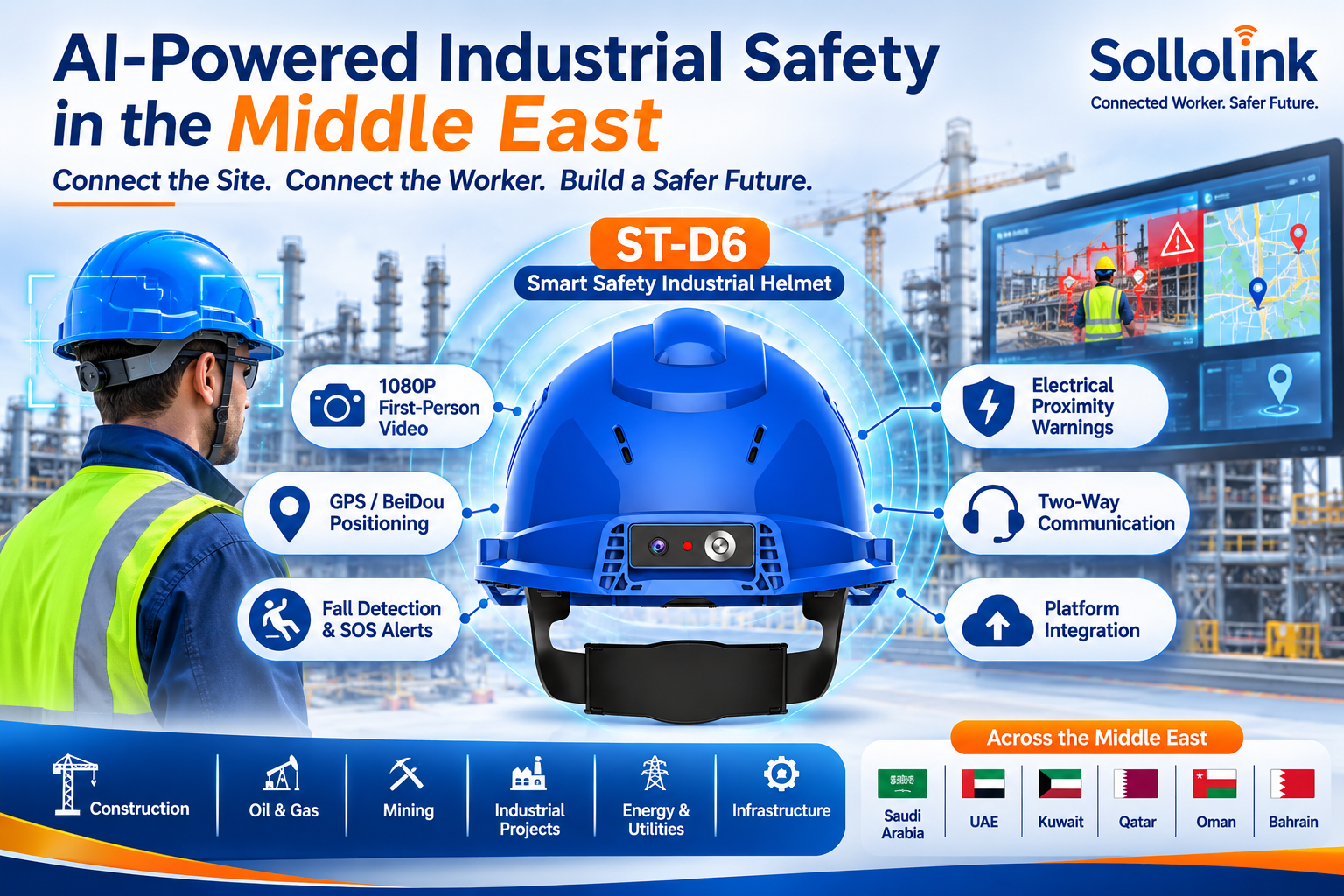
To bridge the gap between fixed infrastructure and frontline workers, Sollolink introduces the ST-D6 Smart Safety Helmet. This wearable IoT edge terminal equips field teams with critical digital capabilities:
-
GPS/BeiDou Positioning: Real-time location tracking across expansive project sites.
-
1080P First-Person Video: Enables remote visual audits and live communication with off-site command centers.
-
Fall & Impact Detection: Automated 6-axis motion algorithms dispatch instant SOS alerts during emergencies.
-
Electrical Proximity Warnings: Alerts technicians before breaching safe approach boundaries near energized equipment.
-
Open Platform Integration: Natively connects with Wialon and open RESTful APIs, allowing seamless integration into existing Digital HSE Solutions without replacing core software infrastructure.
#AIPoweredIndustrialSafetyMiddleEast #IntelligentConstructionSupervisionUAE #DigitalIndustrialSafetyKuwait#ConnectedWorkerTechnologyQatar #DigitalHSESolutionsBahrain#EPCContractorsMiddleEast.
3. Who Can Benefit from Sollolink Connected-Worker Solutions?
Sollolink’s regional business development strategy focuses on four main customer segments.
3.1 Asset Owners and Operators
Oil and gas companies, utility providers, mining groups, and industrial park operators may explore connected-worker technology to complement existing HSE and operational monitoring systems.
Potential decision-makers include HSE directors, digital transformation managers, operations managers, and asset integrity teams.
3.2 EPC and Engineering Contractors
Large EPC and construction companies often coordinate extensive workforces across multiple project areas.
Connected-worker technology can support worker visibility, emergency communication, remote assistance, and project-level safety management.
Potential decision-makers include project directors, construction managers, HSE managers, and procurement teams.
3.3 HSE Service Providers and PPE Distributors
HSE consultants, safety equipment suppliers, and PPE distributors can explore adding smart helmets to their existing product and service portfolios.
Potential partnership models include:
- Regional distribution.
- Project-based equipment supply.
- Smart PPE packages.
- Local technical support.
- Joint customer demonstrations.
- Customized project solutions.
3.4 Digital Platform Operators and System Integrators
BMS, IoT, fleet management, AI video analytics, and digital HSE platform providers can explore integrating Sollolink smart helmets into their existing solutions.
This creates opportunities to combine wearable devices, positioning, safety alerts, and video communication with existing software environments.
#AIPoweredIndustrialSafetyMiddleEast #IntelligentConstructionSupervisionUAE #DigitalIndustrialSafetyKuwait#ConnectedWorkerTechnologyQatar #DigitalHSESolutionsBahrain#EPCContractorsMiddleEast.
4. Flexible Integration with Existing HSE, BMS, and IoT Platforms
Many Middle Eastern industrial companies already operate established digital systems.
They may have existing platforms for:
- AI video surveillance.
- HSE and incident management.
- Building Management Systems (BMS).
- Industrial IoT.
- Fleet and equipment tracking.
- Workforce management.
- Private-cloud or customer-hosted applications.
Sollolink’s approach is to complement these platforms rather than require customers to replace their existing systems.
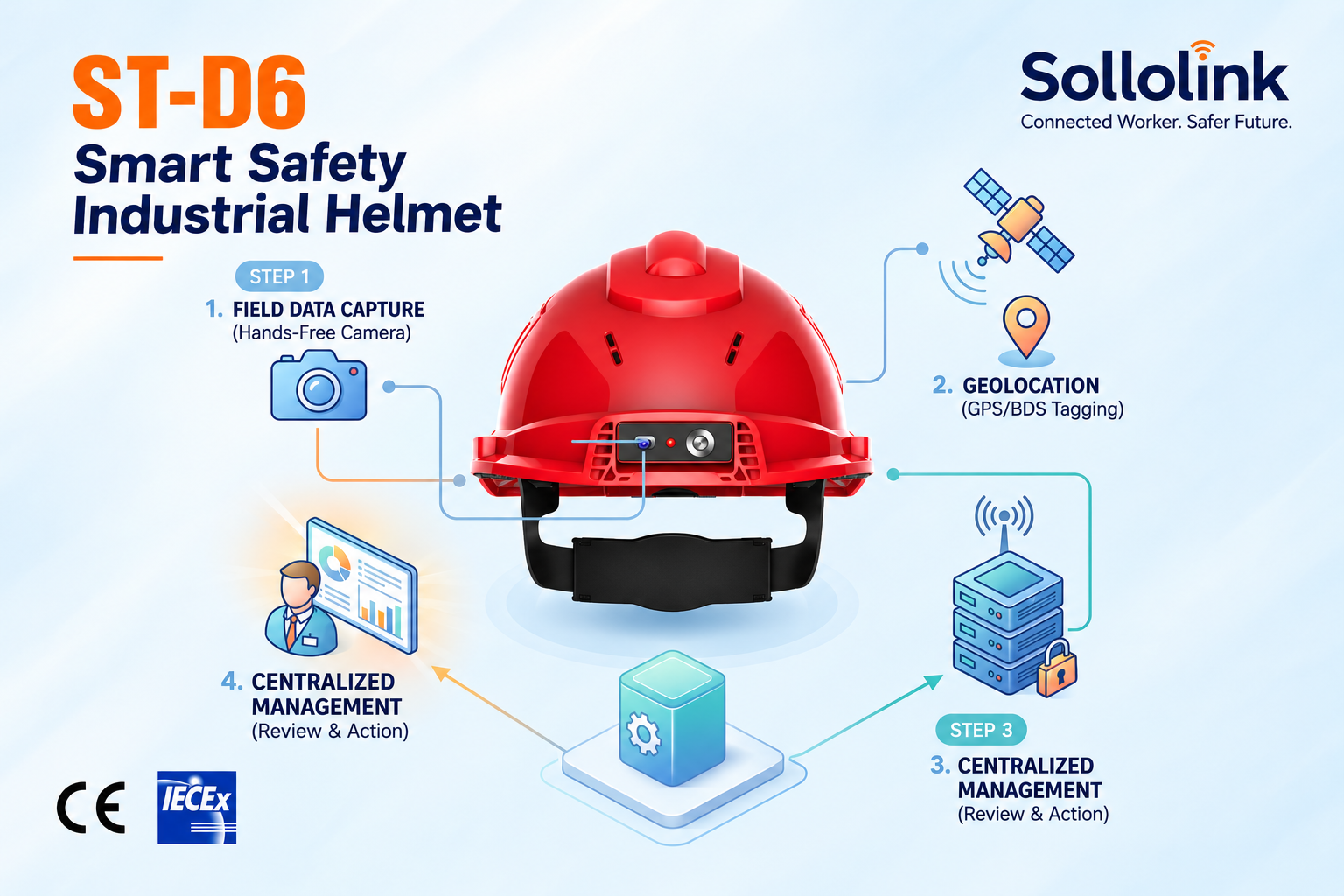
Depending on the target platform and project requirements, integration may involve:
WebSocket Communication: For supported real-time device information.
RESTful APIs: For data exchange and management functions.
HTTP-Based Workflows: For supported image, video, and alarm-record transmission.
Telematics Protocols: Where supported by the device and target platform.
Private-Server Deployment: Customer-hosted architecture can be evaluated for projects with specific data governance requirements.
The actual integration scope should be confirmed through technical documentation, interface testing, network assessment, and pilot deployment.
For projects involving sensitive operational data, companies should also evaluate server location, data routing, user permissions, retention policies, and cybersecurity requirements during system design.
#AIPoweredIndustrialSafetyMiddleEast #IntelligentConstructionSupervisionUAE #DigitalIndustrialSafetyKuwait#ConnectedWorkerTechnologyQatar #DigitalHSESolutionsBahrain#EPCContractorsMiddleEast.
5. Conclusion: From Intelligent Site Monitoring to Connected Worker Safety
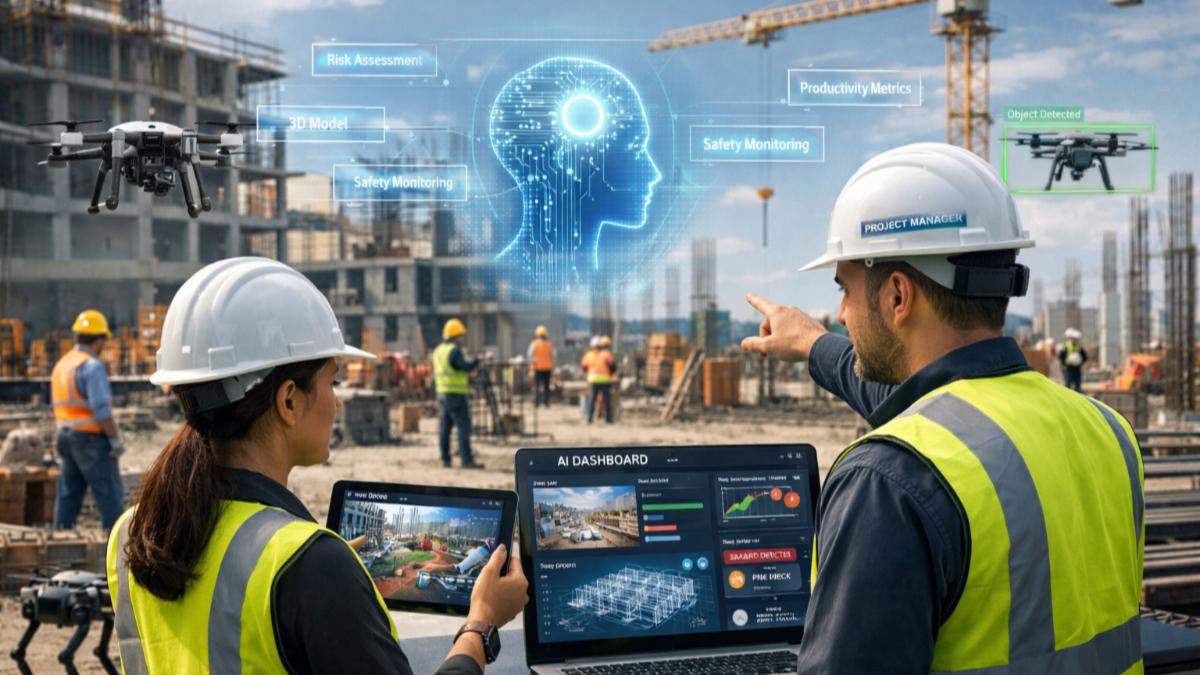
AI-powered visual monitoring is becoming an important part of digital industrial safety across the Middle East.
It helps organizations identify configured risks, improve site visibility, and generate alerts for safety teams.
But the next stage of intelligent construction supervision requires a broader perspective.
By combining AI cameras, connected-worker devices, real-time positioning, emergency communication, and integrated management platforms, companies can extend digital safety oversight from the general worksite to individual frontline personnel.
For the oil and gas, energy, mining, construction, and infrastructure sectors across Saudi Arabia, UAE, Kuwait, Qatar, Oman, and Bahrain, this creates new opportunities for digital HSE innovation and technology partnerships.
Sollolink ST-D6 Smart Safety Helmet: Connecting Workers to the Digital Safety Ecosystem.
If you are an EPC contractor, asset owner, HSE service provider, PPE distributor, or IoT system integrator in the Middle East, let’s explore how connected-worker technology can complement your existing solutions.
Connect the site. Connect the worker. Connect the operation.
SolloLink — Connected Worker & Industrial Safety AI Solutions.
#AIPoweredIndustrialSafetyMiddleEast #IntelligentConstructionSupervisionUAE #DigitalIndustrialSafetyKuwait#ConnectedWorkerTechnologyQatar #DigitalHSESolutionsBahrain#EPCContractorsMiddleEast.
6. Frequently Asked Questions
1. What is AI-powered industrial safety monitoring?
AI-powered industrial safety monitoring uses computer vision and video analytics to identify configured risks in construction sites, industrial facilities, and energy operations. Examples include missing PPE, restricted-area entry, unsafe behaviors, and visible hazardous conditions.
2. What is connected-worker technology?
Connected-worker technology uses smart wearable devices, positioning, communication, and software integration to connect frontline personnel with supervisors and management systems.
It can provide information such as worker location, SOS alerts, device status, and supported video functions.
3. How does Sollolink ST-D6 complement AI camera monitoring?
AI cameras monitor designated work areas. The ST-D6 adds wearable-device information such as worker positioning, emergency alerts, and first-person video. Together, these technologies can support a more complete digital safety architecture when appropriately integrated.
4. Can the ST-D6 integrate with existing HSE or IoT platforms?
Sollolink supports project-oriented integration through available APIs and communication interfaces. The exact functions and data exchange workflows depend on the target platform, device configuration, and technical requirements.
5. Which industries can use Sollolink smart safety helmets in the Middle East?
Potential applications include oil and gas, offshore operations, mining, metallurgy, construction, power utilities, industrial maintenance, infrastructure, and facility management.
6. Does Sollolink work with regional distributors and system integrators?
Yes. Sollolink welcomes discussions with regional PPE distributors, HSE service providers, IoT system integrators, digital platform operators, and industrial technology companies interested in project-based cooperation or regional distribution.
7. Can Sollolink support private-server deployment?
Customer-hosted and private-server deployment options can be evaluated according to project requirements. The data architecture, network routes, security controls, and integration scope should be confirmed during technical assessment.
