
Smart Agriculture in Malaysia: Connected-Worker Solutions for Palm Oil Plantations
Modernizing Palm Oil Management Through Field Automation
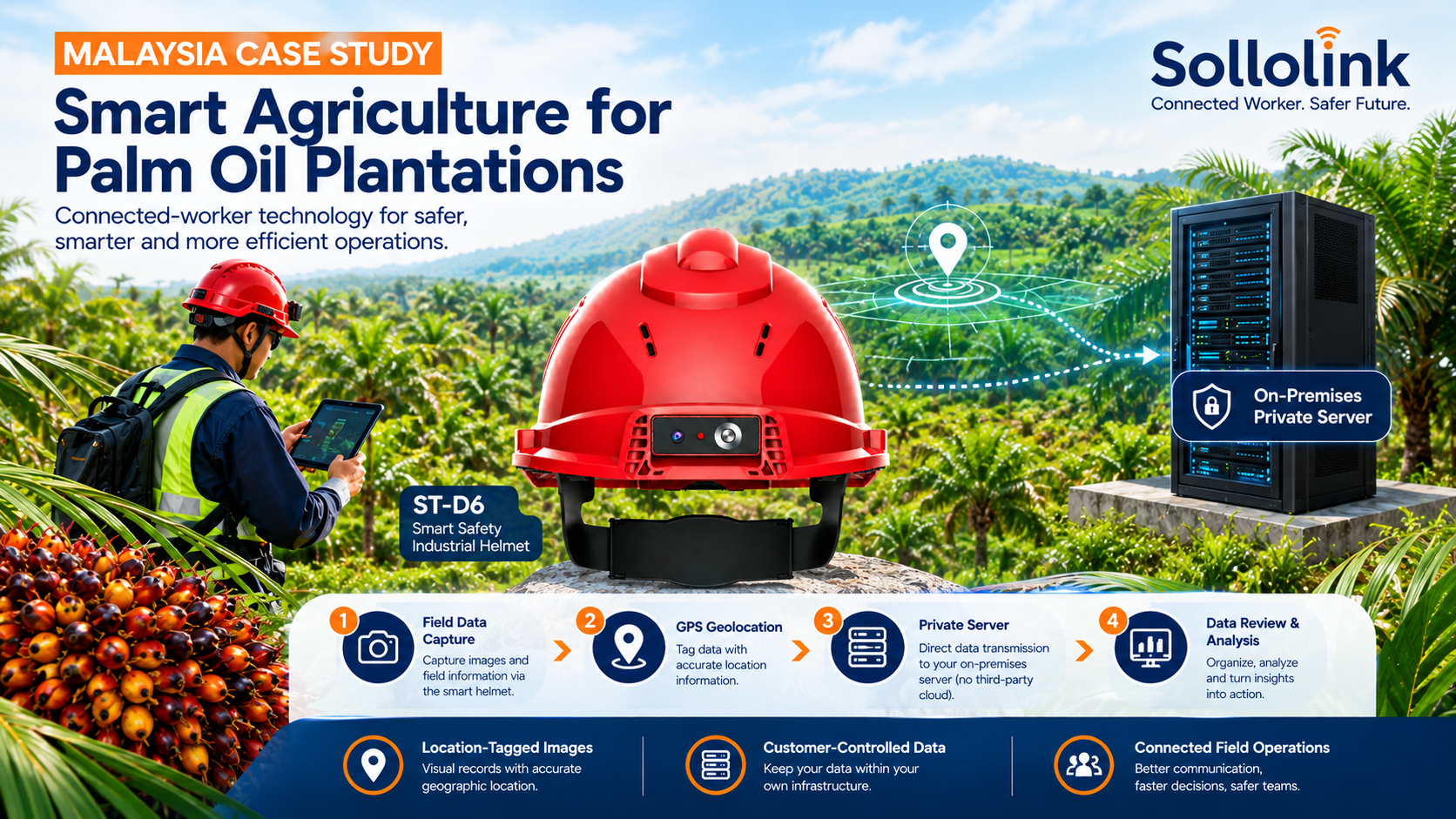
Malaysia’s palm oil plantations span expansive agricultural zones where efficient field data collection, accurate geolocation, and worker coordination are vital to daily operations. However, traditional management often relies on manual inspections, fragmented photos shared via messaging apps, and handwritten logs. These methods make it difficult to maintain consistent records or link field observations with precise locations.
Smart agriculture technologies bridge this gap. By deploying connected-worker devices and industrial wearables, plantation managers can link frontline field observations directly to centralized management systems.
#Malaysiapalmoilplantationcasestudy#smartagricultureMalaysia#precisionagriculturesolutions#smarthelmetforagriculture#GPfielddatacollection#sollolinkprivateserverdeployment
TRADITIONAL PLANTATION WORKFLOW
•Manual Paper Inspections
• Disconnected Photos
• Delayed Status Reporting
SOLLOLINK CONNECTED WORKER ARCHITECTURE
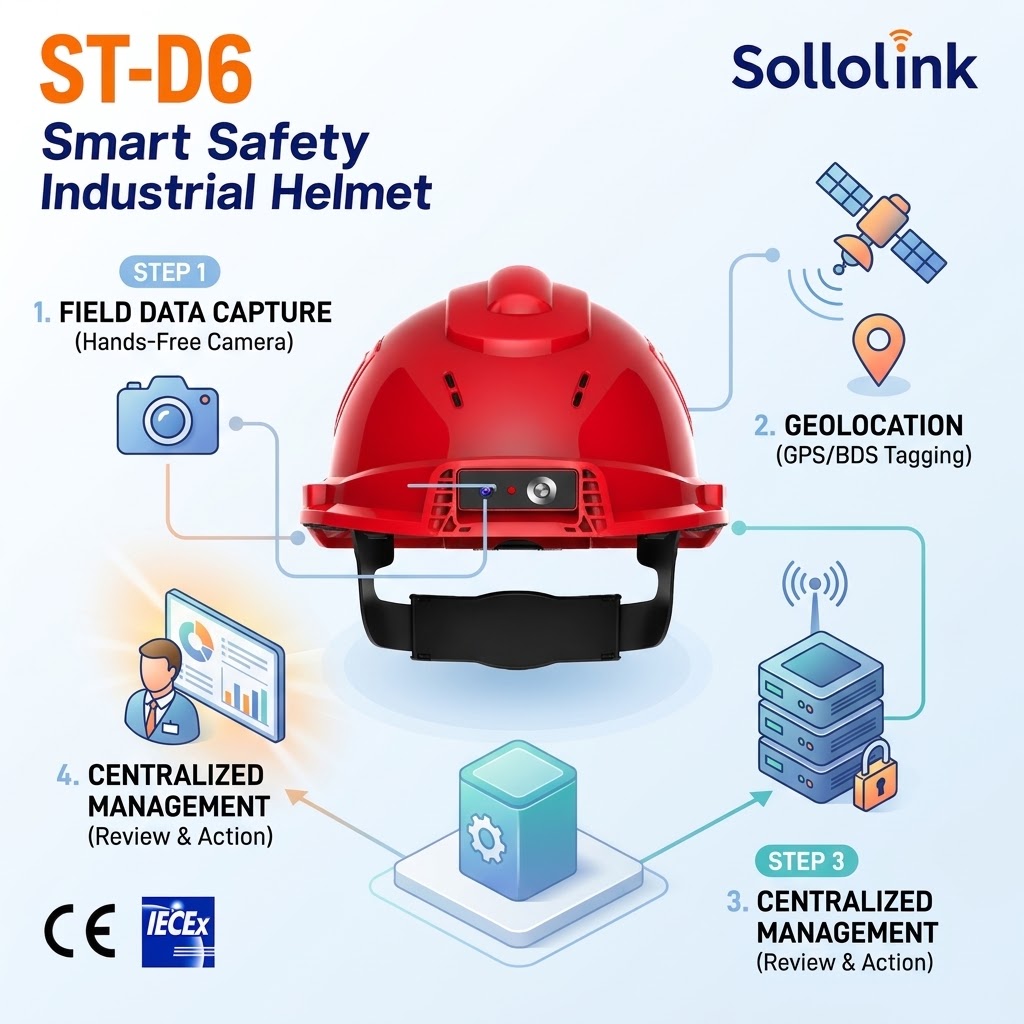
• Hands-Free Camera Field Data Capture
• GPS/BDS Geolocation Metadata Tagging
• Direct Transmission to Private Server
1. Core Applications in Palm Oil Plantations
Camera-Based Field Data Capture: Workers document crop health, infrastructure maintenance needs, and pest issues hands-free using integrated smart helmet cameras.
GPS/BDS Geolocation Tagging: Field photographs and inspection logs are automatically associated with precise geographic coordinates, organizing data by plantation zone.
Direct Private-Server Transmission: Unlike standard public cloud architectures, data streams directly from the device to the customer’s designated private server, ensuring complete data ownership and compliance.
Centralized Review & Follow-Up: Management software organizes timestamps, images, and location metadata to streamline operational reporting and task allocation.
2. The Power of Private-Server Deployment
Data ownership and IT infrastructure control are paramount for large-scale agricultural enterprises. A configured private-server deployment ensures that operational data travels from supported devices directly to the plantation’s internal server without routing through unauthorized third-party cloud platforms.
{Wearable Field Device}–{Secure Local Gateway} –{Customer-Controlled Private Server}
This controlled architecture empowers operators to define custom storage policies, strict access permissions, and seamless integration with internal agricultural management software.
#Malaysiapalmoilplantationcasestudy#smartagricultureMalaysia#precisionagriculturesolutions#smarthelmetforagriculture#GPfielddatacollection#sollolinkprivateserverdeployment
3. Practical Implementation Framework
Define Field Requirements: Determine which plantation workflows require digital documentation (e.g., asset tracking, crop health monitoring, maintenance logging).
Assess Operating Environment: Evaluate plantation terrain, mobile network coverage across remote zones, and existing server infrastructure.
Configure Hardware & Data Flow: Select smart helmet parameters, camera settings, and positioning methods to match operational needs.
Validate Private-Server Communication: Test the end-to-end data pathway, confirming authentication protocols, encryption, and connectivity recovery.
Execute a Field Pilot: Deploy units in a representative sector to evaluate image quality, geolocation precision, transmission reliability, and staff adoption.
4. Transform Your Plantation Operations
Smart agriculture is about connecting frontline observations with structured data management and actionable workflows. Sollolink empowers Malaysian palm oil producers to digitize field operations while retaining absolute control over their data architecture.
Connect your field teams. Secure your agricultural data. Drive smarter plantation management.
Frequently Asked Questions
1. What is the Malaysia palm oil plantation case study about?
It describes a smart agriculture application using camera-equipped smart helmets to collect field data, associate information with geographic locations, and transmit the relevant data to a designated private server.
2. How are smart helmets used in palm oil plantations?
Depending on the device configuration, smart helmets can support hands-free or wearable image capture and connect field observations with location data and digital management workflows.
3. Does the solution use a third-party cloud?
The deployment can be configured to send the relevant data directly to the customer’s designated private server without third-party cloud routing. The complete architecture should be verified during technical implementation.
4. Why combine GPS with camera-based data collection?
GPS can associate captured information with a geographic position, helping management teams organize field records and identify where observations originated.
5. Can the solution integrate with an existing plantation management system?
Integration may be possible through supported APIs or data interfaces. Compatibility depends on the customer’s software, server environment, and required data formats.
6. Can Sollolink adapt connected-worker technology for other industries?
Sollolink’s connected-worker approach can be evaluated for other field-based and industrial applications where wearable devices, location information, communications, and customized data management are required.
